Table of Contents
Eye Motion Desensitization and Reprocessing (EMDR) has changed injury therapy considering that Francine Shapiro created the approach in the late 1980s. For specialists looking for to expand their clinical toolkit with evidence-based trauma treatments, top quality EMDR training becomes an essential financial investment in both professional advancement and client outcomes. Mind Based EMDR supplies a structured pathway with standard accreditation, progressed field of expertise, and ongoing examination that deals with the complete spectrum of trauma-informed technique.
Recognizing EMDR Basic Training Demands
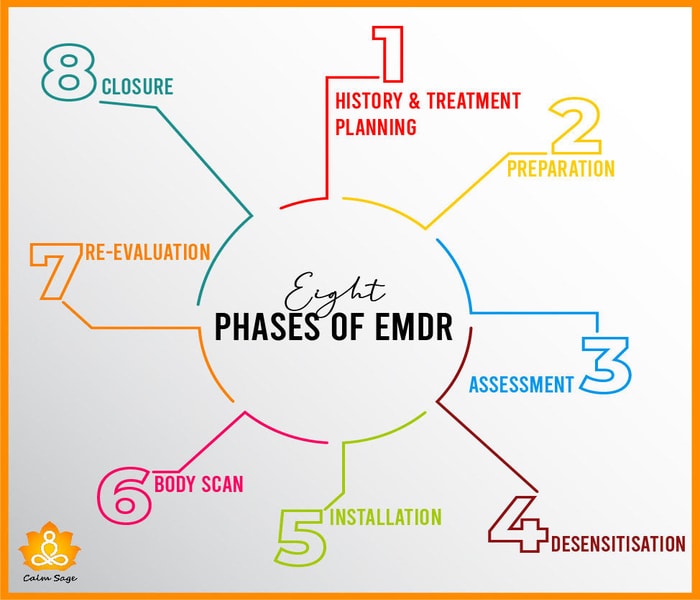
EMDR basic training serves as the structure for integrating this healing strategy into professional technique. The conventional training model consists of about 40-50 hours of direction split between didactic understanding and supervised sensible application. Brain Based EMDR structures their basic training to meet EMDRIA (EMDR International Association) criteria, making sure participants receive comprehensive insurance coverage of the eight-phase protocol that defines EMDR treatment.
The first training modules concentrate on the Adaptive Data processing model, which creates the academic foundation of EMDR. Medical professionals learn exactly how traumatic memories end up being maladaptively saved in semantic networks and exactly how reciprocal stimulation assists in the brain's natural recovery procedures. This neurobiological structure distinguishes EMDR from traditional talk treatment methods and supplies experts with a clear rationale for treatment procedures.
Hands-on method comprises a substantial portion of basic training. Participants participate in role-playing exercises where they alternate in between specialist and customer duties, experiencing the EMDR procedure from both viewpoints. This experiential part verifies important for creating the nuanced timing and restorative existence needed for reliable EMDR distribution. Brain Based EMDR emphasizes this practical application, recognizing that theoretical understanding alone doesn't translate to scientific proficiency.
Advancing Beyond Fundamentals: Specialized EMDR Training
Advanced EMDR training addresses complicated professional presentations that prolong past single-incident trauma. Specialists working with dissociative disorders, intricate PTSD, or accessory trauma call for specific knowledge and customized protocols. Mind Based EMDR's sophisticated training programs explore these tough scientific situations, supplying structures for addressing structural dissociation, ego state work, and developmental trauma.
The advanced educational program generally explores current protocol advancements including the Flash Strategy, the Reverse Protocol for exceedingly blocked processing, and the Inverted Protocol for modern processing. These specialized methods increase the therapist's capacity to adapt EMDR for customers who do not respond ideally to basic methods. Understanding when and exactly how to customize the standard procedure calls for both theoretical expertise and monitored experience.
Advanced training also deals with source development and setup methods that strengthen customer stabilization prior to injury processing. The Source Growth and Setup (RDI) protocol and other primary interventions make sure customers possess sufficient affect guideline capability prior to engaging distressing product. Brain Based EMDR incorporates these stabilization comes close to throughout their training continuum, highlighting safety and security and customer preparedness as paramount considerations.
The Crucial Duty of EMDR Assessment
EMDRIA qualification requires 20 hours of examination adhering to standard training, mirroring the specialist agreement that supervised method shows necessary for competent EMDR distribution. EMDR examination groups provide structured chances for clinicians to existing instances, get comments, and improve their therapeutic strategy under specialist support. Brain Based EMDR deals both specific and group consultation options that accomplish accreditation requirements while fostering ongoing expert advancement.
Consultant-in-Training (CIT) ConsultationAppointment addresses the unpreventable obstacles that arise when using EMDR methods to real-world medical complexity. Consultants aid therapists navigate obstructed processing, handle abreactions, and adapt methods for details client discussions. This led analytic increases ability development and prevents the invasion of ineffective patterns that can occur with without supervision method.
Past qualification needs, several knowledgeable EMDR therapists preserve ongoing examination partnerships throughout their occupations. The consultation procedure gives responsibility, fresh perspectives on tough instances, and exposure to developing ideal practices within the EMDR area. Brain Based EMDR's appointment version highlights collective learning, creating a helpful environment where specialists can honestly talk about professional issues without judgment.
Developing a Trauma-Informed Therapeutic Foundation
Effective EMDR practice requires more than procedure memorization-- it requires a detailed trauma-informed strategy that educates every facet of restorative engagement. Trauma-informed training for therapists addresses exactly how terrible experiences form client presentation, connection patterns, and treatment procedure. Mind Based EMDR integrates trauma-informed concepts throughout their training curriculum, acknowledging that technical proficiency without trauma level of sensitivity limitations therapeutic efficiency.
Trauma-informed treatment begins with recognizing exactly how trauma influences the worried system and forms protective adaptations. Therapists discover to recognize trauma feedbacks consisting of hypervigilance, dissociation, and hyperarousal as adaptive survival systems instead of pathological signs. This reframing basically changes the restorative partnership from a problem-focused stance to a strengths-based appreciation of client resilience.
The training stresses producing physical and mental safety within the restorative environment. Trauma survivors commonly experience the treatment room itself as potentially harmful, needing thoughtful attention to seating plans, lighting, personal privacy, and predictability. Mind Based EMDR instructs professionals to work together with customers in developing security methods and respecting autonomy throughout the treatment procedure.
Selecting High Quality EMDR Training Programs
The expansion of EMDR training choices develops both possibilities and difficulties for specialists seeking accreditation. Quality training programs differentiate themselves via EMDRIA approval, experienced fitness instructors with considerable medical histories, and thorough coverage of both procedure auto mechanics and theoretical foundations. Brain Based EMDR's training structure mirrors present best practices in grown-up knowing, combining lecture, demo, monitored technique, and appointment in developmentally suitable sequences.
Instructor knowledge substantially impacts training quality and participant results. Reliable EMDR fitness instructors have not just technological mastery yet likewise the capability to produce emotionally safe learning settings where participants can exercise vulnerable ability growth. Mind Based EMDR's trainers bring substantial medical experience treating varied injury discussions, providing students with exposure to real-world case examples that brighten procedure application throughout different customer populations.
The training format-- whether extensive weekend break workshops, extended regular sessions, or hybrid online-in-person designs-- affects finding out retention and ability advancement. Research on adult discovering recommends spaced exercise with opportunities for between-session application returns remarkable end results compared to compressed extensive layouts. Brain Based EMDR offers flexible training layouts that accommodate varied learning choices while keeping strenuous standards for professional capability.
The Investment in EMDR Training: Specialist and Client Outcomes
Consultant-in-Training (CIT) Consultation
EMDR training stands for a considerable financial investment of time, power, and funds. Standard training expenses typically range from $1,500 to $3,000, with additional expenses for assessment, progressed training, and certification fees. However, the return on this investment shows up in increased professional abilities, improved client outcomes, and often enhanced method earnings as trauma-specialized solutions command premium repayment prices.
From a customer result point of view, EMDR consistently shows remarkable efficacy for PTSD therapy contrasted to conventional healing techniques. Meta-analyses show EMDR generates clinically significant symptom reduction in less sessions than cognitive-behavioral treatment, translating to reduced suffering and faster healing for trauma survivors. Specialists learnt EMDR can provide clients evidence-based therapy that deals with trauma at the neurobiological level, essentially solving stressful memories as opposed to just taking care of signs.
Mind Based EMDR's thorough training pathway-- from basic certification via advanced field of expertise and continuous consultation-- supplies specialists with the understanding, skills, and support necessary for certain, skilled injury treatment. Their emphasis on neurobiological structures, trauma-informed method, and sensible application creates clinicians efficient in adjusting EMDR procedures to varied presentations while keeping fidelity to the core approach that makes EMDR distinctively efficient for injury resolution.

Table of Contents
Latest Posts
Finding the Right Therapist for Clinical Depression, Anxiousness, and Trauma: A Testimonial of Individual and Couples Treatment Alternatives
Finding Hope and Healing: A Deep Study Household & Couples Therapy in Albuquerque
Understanding Embodiment in Eating Disorders
Navigation
Latest Posts
Finding Hope and Healing: A Deep Study Household & Couples Therapy in Albuquerque
Understanding Embodiment in Eating Disorders